INVEST IN VETS • LOCAL HOUSING CASE STUDY
NORTH DAKOTA | VERIFIED STATEWIDE CASE STUDY | OCTOBER 20, 2026
North Dakota Builds a Statewide Housing Net
A $2.22 million FY2027 grant award strengthens prevention, rapid rehousing and transitional support - while local VA and community partners keep permanent housing as the destination.
Verified program snapshot
NEW AWARD | $2,221,785 announced September 23, 2026 for North Dakota homelessness work in FY2027 |
DELIVERY MODEL | SSVF prevention and rapid rehousing plus GPD transitional housing and supportive services |
STATEWIDE REACH | Community Action Partnership reports SSVF availability in all 53 North Dakota counties |
MEASURED RESULT | Fargo VA Health Care System reported 177 Veterans permanently housed in FY2025 |
HOUSING CREATED | No new apartment or Veteran-designated unit count was announced with the grant award |
CURRENT STATUS | Funding awarded; existing services active; FY2027 grant results not yet reported |
A statewide response built around the next housing step
North Dakota is not describing one new apartment complex. Its current response is a connected housing system: federal grant funding, a statewide nonprofit network, Fargo VA homeless-program staff and local landlords. On September 23, 2026, the Fargo VA Health Care System announced $2,221,785 in VA grants for community organizations serving North Dakota in fiscal year 2027. The award supports Supportive Services for Veteran Families (SSVF) work that prevents eviction, locates safer housing and rapidly rehouses Veterans, along with Grant and Per Diem (GPD) transitional housing and intensive services.
That distinction matters. The award is verified funding, but it is not a newly opened building, a promise of rent-free housing or proof that a specific number of Veterans has already been housed with FY2027 dollars. The announcement publishes no new-unit or Veteran-designated-unit count. Future reporting must show how many households receive help and reach permanent housing.
The local partners already have operating infrastructure
Community Action Partnership of North Dakota says SSVF is available through its member agencies in all 53 counties. The network offers outreach, individualized case management, landlord outreach, benefits connections and time-limited help paid to third parties for eligible costs such as rent, utilities, moving expenses and short hotel or motel stays. In southeastern North Dakota, SENDCAA identifies itself as a partner administering SSVF and directs Region 5 Veterans to a Veteran Services Case Manager. These are operating access points; eligibility and the type or amount of assistance must be determined by the program, not by a social-media post or donor.
Fargo VA supplies another layer. Its downtown Community Resource and Referral Center lists HUD-VASH, Tribal HUD-VASH, GPD, outreach, employment and justice programs. VA says its services reach Fargo, Grand Forks, Bismarck, Dickinson, Williston, Minot, Belcourt and Mahnomen. In a rural state, a Veteran may need a warm handoff among outreach, benefits, housing authority, SSVF and landlord contacts rather than one application.
Measured progress, with a clear date and boundary
A separate VA release dated December 10, 2025 reported that the Fargo VA Health Care System permanently housed 177 Veterans during fiscal year 2025. That is a measured service-area outcome, not the result of the newer FY2027 award and not a statewide Point-in-Time count. It also does not mean Veteran homelessness has ended. It shows that the local system can move people into permanent housing, while the 2026 award is intended to strengthen the prevention, rapid-rehousing, transitional-housing and supportive-service pipeline that feeds future outcomes.
HUD-VASH and VA benefits must remain separate
HUD-VASH combines a HUD Housing Choice Voucher with VA case management and clinical support. It is rental assistance paid through a public housing authority, not spendable cash and not the same as VA disability compensation. VA also states that it does not make direct rental payments to landlords; housing-assistance payments come from the public housing authority, while SSVF subsidies are administered by grantee organizations. The Veteran may still owe a tenant portion, the unit must pass inspection, the rent must be approved and the lease remains enforceable.
For a deployed or disabled Veteran who avoids asking for help because of pride, identity or stigma, first contact should preserve control. A private conversation can offer a homeless-program referral, accredited benefits help or a HUD-VASH screening without demanding a public diagnosis or personal story. Disability compensation is a separate earned benefit, and neither a disability rating nor disclosure to a donor should be treated as the price of housing assistance. Housing referrals and the 24/7 hotline must stay available even when a Veteran declines fundraising or public visibility.
Landlords are part of the housing supply
A statewide safety net still needs available units. VA advises landlords to contact the local public housing authority or VA medical center, prepare the unit for an NSPIRE inspection, complete the Request for Tenancy Approval, negotiate an approvable rent, sign the Housing Assistance Payments contract and then execute the lease with the Veteran. Invest in Vets could help by recruiting multifamily and accessory-dwelling-unit owners, maintaining a verified unit list and giving each owner one accountable point of contact. The nonprofit should never promise payment, approval or a move-in date that belongs to the housing authority, grantee or landlord.
Privacy and donation safety for a planned Veteran Site
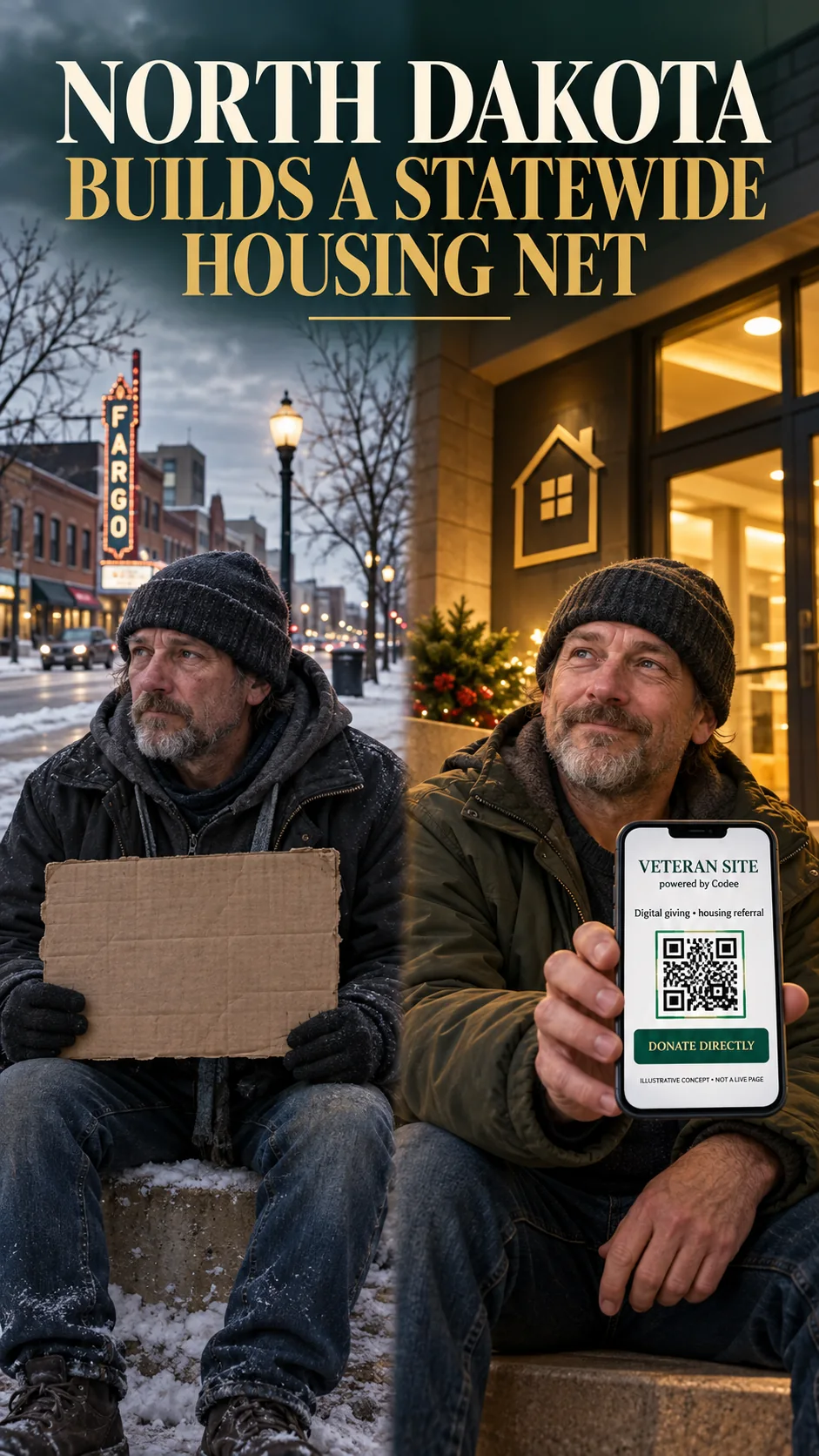
Veteran Site powered by Codee is planned, not represented as live. It is intended to be free for eligible, consenting homeless disabled Veterans. The concept is an opt-in personal donation and referral page whose QR code links to that specific verified page. A Veteran could voluntarily direct supporters to the Veteran's own authorized Cash App, Zelle or other payment account. Codee intends a 0-percent platform commission; that is not a promise of 100 percent net after processor costs, taxes or account terms, and donations cannot guarantee housing.
A safe page should publish only approved minimum information, exclude diagnosis records and identity documents, display the payment destination before a donor acts, and allow prompt pause or removal. If a Veteran chooses a trusted third-party helper, informed consent must identify that person and explain that the intermediary controls funds received until transferred. The helper's receipts cannot be represented as guaranteed to reach the Veteran. No real beneficiary, earnings total or outcome should be fabricated.
Five verified AI developments - and five limited nonprofit uses
Each item below is a dated company primary-source development. Each Invest in Vets application is a planning idea only, not a deployed feature. AI must not decide housing eligibility, voucher approval, disability status, donor trustworthiness or who deserves help.
1. Microsoft - nonprofit Copilot promotions, September 24, 2026
Verified development: Microsoft documented combinable nonprofit-specific Copilot promotions for eligible customers through December 31, 2026, subject to eligibility and transaction requirements. Planned use: compare the verified nonprofit cost with a manual workflow before buying anything, and limit any pilot to non-sensitive drafting. Veteran names, diagnoses, payment credentials and case files should stay out of prompts unless a separately approved privacy process exists.
2. Salesforce - Trusted Enterprise AI Harness, September 10, 2026
Verified development: Salesforce described capabilities spanning context, agency, action, governance, security and models, plus an AI Control Plane; some foundations are available while new capabilities are planned. Planned use: keep a nonprofit register of every AI tool, owner, permitted data, action limits, review date and shutdown path - without ranking Veterans.
3. Anthropic - 2026 Usage Policy update, October 8, 2026
Verified development: Anthropic clarified that high-risk uses affecting health, legal rights, finances, livelihood or essential services require a qualified human reviewer and disclosure that AI was used; the update takes effect November 12, 2026. Planned use: require a named human to review any AI-assisted referral draft and tell the Veteran when AI helped prepare it. The human, not the model, makes and owns the decision.
4. Adobe - interactive editing controls, September 29, 2026
Verified development: Adobe announced targeted image, design and PDF editing controls inside its ChatGPT plugin. Planned use: create outreach flyers and redact illustrative documents with hands-on review, then run a privacy check. Never use a generated face as a real beneficiary or alter eligibility records.
5. Meta - Muse Wonder agent models, October 12, 2026
Verified development: Meta announced Muse Wonder and Muse Wonder Full for agentic work, said Muse Wonder was available to developers and described privacy and security training; Meta also said a fuller safety report would follow. Planned use: test only on synthetic lease scenarios to draft plain-language questions for a landlord or case manager. Do not grant access to a Veteran's messages, calendar, documents or finances without specific consent and human oversight.
The practical nonprofit takeaway: build a 53-county warm-handoff map
North Dakota's lesson is coordination, not a single building. Invest in Vets could maintain a private, role-limited map for all 53 counties that identifies the current SSVF agency, nearest Fargo VA homeless-program contact, housing authority, landlord lead and emergency backup. Each referral would carry only the minimum needed status: contact attempted, consent received, eligibility screening scheduled, unit offered, inspection pending, lease signed and 30/90/180-day housing check. Public reporting should be aggregate and dated, with no names, diagnoses, addresses or donation totals.
The mission outcome is stable, affordable housing with support. Prevention payments, a HUD-VASH voucher, disability compensation and charitable donations are different tools with different rules. A strong local partnership keeps those tools separate, verifies every handoff and measures what happens after the announcement - especially whether the Veteran remains safely housed.
Need housing help now? Call the VA National Call Center for Homeless Veterans at 877-424-3838 (free, confidential and available 24/7), or use the North Dakota and Fargo VA resources below. To support Invest in Vets' mission, use the official donation page. Donations support the cause but do not guarantee a home, rent payment or individual result; this article makes no tax-deductibility claim.
Veteran and landlord resources
VA National Call Center for Homeless Veterans - 877-424-3838; free, confidential and available 24/7
Fargo VA Medical Center homeless Veteran care - HUD-VASH, Tribal HUD-VASH, GPD, outreach and local service-area contacts; accessed October 20, 2026
Community Action Partnership of North Dakota SSVF - statewide SSVF services and all-53-county availability; accessed October 20, 2026
SENDCAA Supportive Services for Veteran Families - Region 5 prevention and rapid-rehousing contact; accessed October 20, 2026
VA landlord guide - HUD-VASH landlord steps, payment source and inspection information; updated September 30, 2026
North Dakota Department of Veterans Affairs homeless assistance - state resource links; accessed October 20, 2026
Sources and verification notes
VA North Dakota FY2027 homelessness grants - September 23, 2026; $2,221,785 award and eligible SSVF/GPD uses
Fargo VA FY2025 permanent-housing results - December 10, 2025; 177 Veterans permanently housed in the Fargo VA service system
Microsoft September 2026 Partner Center announcements - nonprofit Copilot promotions dated September 24, 2026
Salesforce Trusted Enterprise AI Harness - September 10, 2026
Anthropic 2026 Usage Policy update - October 8, 2026
Adobe interactive editing controls - September 29, 2026
Meta Muse Wonder models - October 12, 2026; page updated October 13, 2026